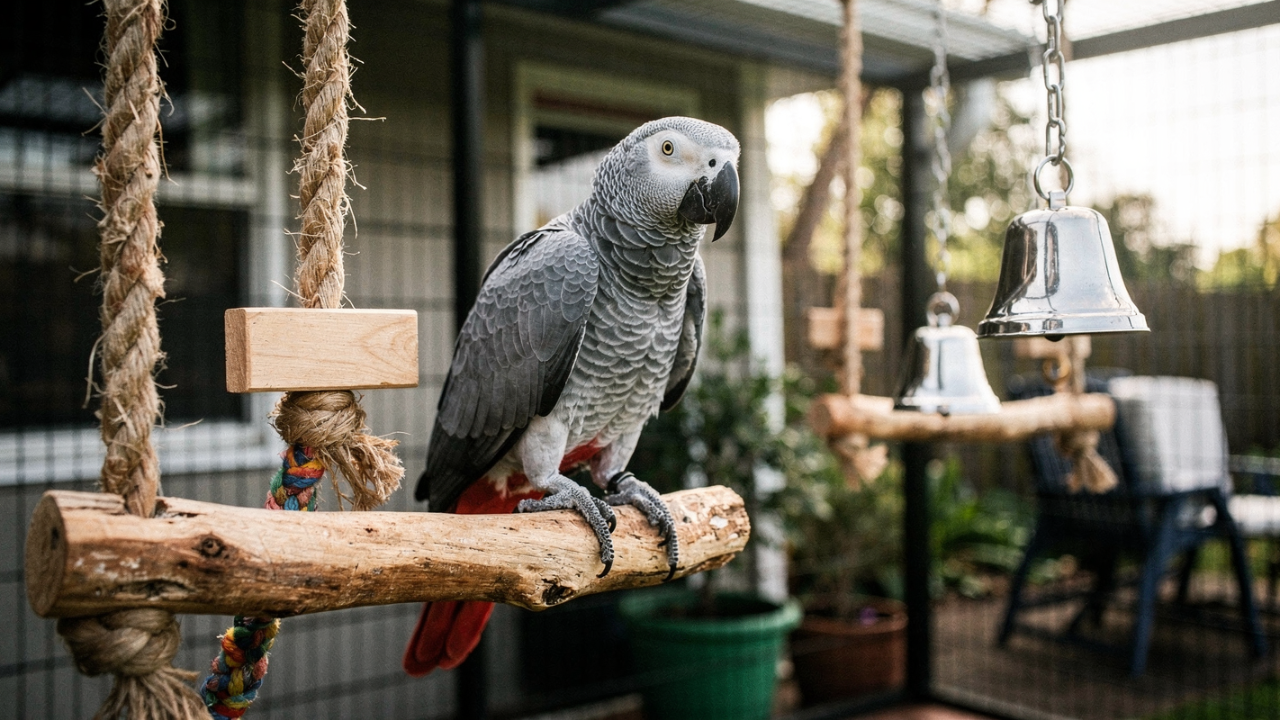
African Grey parrots possess a unique intelligence and sensitivity that demands a tailored, force-free approach to training and building an unbreakable bond.
African Grey parrots are renowned for their incredible intelligence and mimicry, often making them highly sought-after companions. But owning and training an African Grey isn't quite like training a cockatiel or even some of the larger macaws. Their unique cognitive abilities and sensitivity mean that a generic approach to parrot training simply won't cut it. At Beak School, we believe in understanding each species' individual needs, especially when it comes to fostering a relationship built on trust and positive reinforcement. Let's dive into what makes African Greys so special and how you can adapt your training to help them thrive.
The Minds of African Greys: Beyond Mimicry
While often celebrated for their ability to "talk," African Greys possess far more than just mimicry skills. Research, most notably with Alex the African Grey and Dr. Irene Pepperberg, has demonstrated these birds' capacity for cognitive tasks previously thought to be exclusive to primates. They can understand concepts like "same" and "different," count, identify objects by shape and color, and even construct novel phrases.
What does this mean for training?
- They're not just repeating; they're often understanding. This means your Grey isn't just mindlessly squawking a phrase; they might be applying it contextually. This opens up incredible possibilities for communication and understanding, but also for miscommunication if we're not clear.
- They thrive on intellectual stimulation. A bored Grey is an unhappy Grey, and an unhappy Grey can develop behavioral issues like feather plucking or screaming. Training, when done positively, is a fantastic form of mental enrichment.
- They are acutely observant. Greys pick up on subtle cues – your body language, your tone of voice, even your emotional state. This makes them incredibly sensitive respondents to your training methods, demanding consistency and genuine positive interactions.
Because of this advanced cognitive ability, African Greys can quickly learn intricate sequences and associations. This is a huge advantage for positive reinforcement training, as they can rapidly connect a desired behavior with its positive consequence.
Why Traditional Methods Fail African Greys (and All Parrots)
It's crucial to understand why force-based or aversive training strategies are not only ineffective for African Greys but actively damaging. These methods, which might include forcing a bird to step up, spraying them with water, or scolding them, erode trust and can lead to severe behavioral problems.
- Damage to Trust: Greys are highly sensitive. A single negative interaction can significantly set back the trust you've worked hard to build. They remember. They hold grudges.
- Learned Helplessness: When a bird is repeatedly forced into a situation or punished without understanding why, they can shut down. This isn't compliance; it's a state of learned helplessness, which can manifest as lethargy, depression, or feather destructive behaviors.
- Fear-Based Responses: A bird trained with force will often perform behaviors out of fear, not cooperation. This can lead to biting, screaming, or aggression when they feel threatened or cornered.
- Suppression vs. Solution: Punishment might suppress an unwanted behavior temporarily, but it doesn't teach the bird what to do instead. It also doesn't address the underlying reason for the behavior. For a Grey, understanding the "why" is often key.
Our goal at Beak School is always to empower your bird and strengthen your bond. This can only be achieved through positive reinforcement, where your Grey chooses to engage because it's a rewarding experience.
Building Trust and Training Success with Positive Reinforcement
So, how do we harness the Grey's unique intelligence and sensitivity for successful, force-free training? It all comes back to trust, choice, and positive reinforcement.
1. Start with Trust: The Foundation of Everything
Before you even think about teaching tricks, focus on building a strong, positive relationship. This means:
- Respecting their boundaries: Always allow your Grey to approach you on their terms. Don't grab, chase, or force interaction.
- Observing their body language: Learn to read your Grey's subtle cues. Pinning eyes, raised hackles, a puffed-up posture, or a tightly held body all communicate their emotional state.
- Making every interaction positive: Pair your presence with good things – favorite treats, soft talking, calm interactions.
For a Grey, feeling safe and respected is paramount. Once this foundation is solid, they will be much more open to engaging in training.
2. Leverage Their Intelligence with Engaging Sessions
Because Greys are so smart, they can get bored quickly if training is repetitive or unchallenging. Keep training sessions:
- Short and sweet: 5-10 minutes, several times a day, is far more effective than one long, tedious session.
- Varied: Don't just work on one behavior. Rotate through several to keep their minds engaged.
- Goal-oriented with progression: Once they grasp a simple behavior, think about how you can add difficulty or combine it with another. For example, once they "step up," can they step up onto different surfaces or from a short distance?
Use their favorite, high-value treats (think almonds, walnuts, pine nuts, or a small piece of fruit they adore) as rewards. The reward should be directly followed by the desired behavior, making the connection crystal clear.
3. Focus on Choice and Collaboration
African Greys, perhaps more than many other parrots, appreciate having agency. Give them choices whenever possible, even during training.
- Voluntary Step-Up: Never force your Grey to step onto your hand. Lure them with a treat, reinforcing when they make the choice to step up willingly. Their choice to engage is the reward.
- Target Training: This is an excellent starting point for Greys. It teaches them to touch an object (like a chopstick or a dowel) with their beak for a reward, giving them a clear, actionable task and agency over their movement. It’s the gateway to so many other behaviors.
- Positive Reinforcement Only: If your Grey performs the desired behavior, they get a reward. If they don't, there's no punishment, simply no reward. Try again when they're more receptive, or break the behavior down into smaller, easier steps.
When you involve your Grey in the process and empower them to make choices, training becomes a collaborative game rather than a command-and-demand situation. This deepens their understanding and fortifies your bond.
Recognizing and Addressing Behavioral Challenges
Due to their sensitive nature, African Greys can develop behavioral issues if their needs aren't met or if trust is broken. Feather plucking, screaming, and aggression are often symptoms of underlying issues, not just "bad behavior."
- Feather Plucking: This is a complex issue but often linked to stress, boredom, lack of enrichment, or medical problems. A positive reinforcement approach involves increasing mental stimulation, ensuring a healthy diet, and ruling out medical causes with an avian vet. Never punish plucking; it only increases stress.
- Screaming: Greys can be loud. However, excessive screaming often stems from boredom, seeking attention, fear, or a desire for something. Use positive reinforcement to teach them to ask for attention appropriately (e.g., a quiet vocalization, coming to a specific perch) and ignore excessive screaming.
- Aggression/Biting: This is almost always fear-based or a communication of "back off!" If your Grey is biting, re-evaluate your interactions. Are you pushing them too far? Are they scared? Use positive reinforcement to reward calm, non-aggressive interactions, and give them ample space.
For any behavioral challenge, consult with a certified avian behavior consultant who uses force-free methods. Just like with humans, a Grey's behavior communicates
their internal state, and our compassionate response is key.
Final Thoughts
Training an African Grey parrot is an incredibly rewarding journey that offers a rare glimpse into the mind of a truly remarkable animal. By understanding their unique intelligence and sensitivity, committing to force-free, positive reinforcement methods, and prioritizing trust above all else, you won’t just train behaviors; you’ll build an unbreakable bond with a truly extraordinary companion. Embrace their quirks, celebrate their cleverness, and enjoy the profound connection that awaits you.