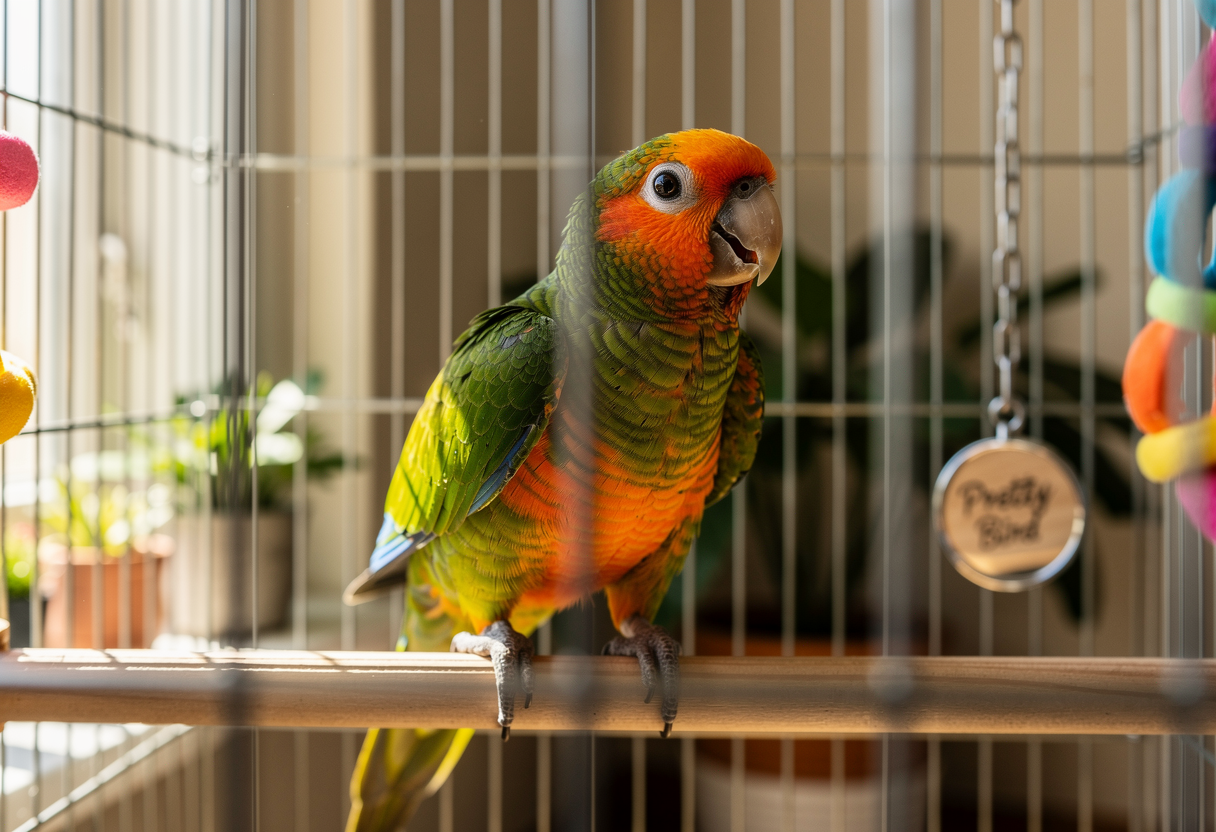
Dive into the vibrant world of caique parrots! Discover their playful, intelligent, and sometimes mischievous personalities, ensuring a positive and enriching life for your feathered friend with force-free training.
Caique Personality: A Burst of Joy and Mischief
Caiques are often described as the clowns of the parrot world, and for good reason! These small to medium-sized parrots, particularly the Black-headed (Pionites melanocephala) and White-bellied (Pionites leucogaster) caiques, are renowned for their energetic, playful, and often comical personalities. If you're considering welcoming a caique into your home, or already share your life with one, understanding their unique personality traits is key to a harmonious and enriching relationship.
Understanding the Caique Persona: More Than Just Play
The Perpetual Motion Machine
One of the first things you'll notice about a caique is their boundless energy. They're not content to sit still for long and are constantly exploring, climbing, and tumbling. This isn't just random hyperactivity; it's a deep-seated need for physical and mental engagement. Think of them as tiny feathered acrobats always ready for their next performance. This energy means they need a lot of space to move, climb, and forage, both inside and outside their cage.
Intelligent and Cunning
Beneath the playful exterior lies a sharp, intelligent mind. Caiques are quick learners and problem solvers. This intelligence is a double-edged sword: it makes them a joy to train using positive reinforcement, but it also means they can become bored quickly if not adequately stimulated. A bored caique can easily become a destructive caique, or one that seeks attention in less desirable ways.
- Foraging: Essential for their mental well-being. Hide treats in toys, paper, or foraging complexes to keep their minds active.
- Training: Harness their intelligence with consistent positive reinforcement. Teach tricks, target training, step-up, and recall. This builds trust and provides mental exercise.
- Novelty: Introduce new toys, textures, and safe environments regularly to prevent boredom. Rotate toys to keep things fresh.
The Mouthy Manipulators
Caiques tend to be very "mouthy" birds. They explore the world with their beaks, chewing on everything they can get their formidable beaks on. This is natural and shouldn't be suppressed. Instead, provide a rich array of safe, chewable toys made from wood, cardboard, paper, and natural fibers. Redirection is paramount: if they're chewing on something inappropriate, gently redirect them to an appropriate chew toy using positive reinforcement when they choose the correct item.
They can also be quite nippy, especially when excited or overstimulated. This is often not out of malice but rather a communication attempt or a manifestation of their playful "rough and tumble" nature. Understanding their body language and learning their individual thresholds for interaction is crucial. Avoidance of situations that lead to nipping, and training alternative behaviors using positive reinforcement, are key.
A Social Butterfly (Often with One Person)
Caiques are highly social creatures and thrive on interaction with their human flock. They often bond very strongly with one or two primary caregivers, becoming incredibly affectionate and demanding of attention. While they can be friendly with others, they might be more reserved or even show assertive behavior towards those not in their inner circle. Early and consistent socialization with various people in a positive and force-free manner can help them be more accepting of others.
Their need for social interaction means they should not be left alone for long periods. If your lifestyle doesn't allow for several hours of direct interaction daily, a caique might not be the best fit, or you may need to consider a second caique (with careful introduction and observation).
The "Bully" Tendencies
Despite their small size, caiques often act like they are much larger birds. This can manifest as an endearing fearlessness, but also as a tendency to "bully" other pets (even much larger ones) or sometimes even people. They have a strong sense of self-preservation and are not afraid to defend their perceived territory or belongings. This bold nature means that positive reinforcement and respectful handling are especially important. Never try to physically dominate a caique or use punishment, as this will only lead to fear, aggression, and a breakdown of trust.
Training Your Caique: Harnessing Their Brilliance Force-Free
Given their intelligence and energy, caiques are excellent candidates for positive reinforcement training. This isn't just about teaching tricks; it's about building a strong, trusting relationship and providing mental enrichment.
- Target Training: Teach your caique to touch a specific target (like a dowel or your finger) for a reward. This is a foundational behavior for almost all other training.
- Step-Up: Essential for safe and easy handling. Consistently reward them for stepping onto your hand or arm.
- Recall: Training your caique to fly or run to you on command can be a lifesaver in an emergency and is a wonderful way to build your bond.
- Behavior Modification: Use positive reinforcement to shape desired behaviors and redirect undesirable ones. For example, if they're nipping, teach them to "kiss" or gently touch a target instead, rewarding those alternative behaviors heavily.
- Choice and Control: Always give your caique choices where possible. For instance, offer two toys and let them pick. This fosters a sense of agency and reduces frustration.
Avoid any method that involves force, scolding, or punishment. Caiques are highly sensitive and will quickly lose trust if treated harshly. This can lead to fear-based aggression or withdrawal.
Daily Life with a Caique: Enrichment is Everything
To keep your caique happy and well-adjusted, enrichment should be a cornerstone of their daily routine.
- Spacious Cage: The bigger, the better. Enough room for climbing, flapping, and multiple perches at different heights.
- Out-of-Cage Time: Several hours of supervised out-of-cage time daily is non-negotiable. This is where they can truly stretch their wings (figuratively and literally), explore, and interact with you.
- A Variety of Toys: Provide rotating toys for chewing, foraging, climbing, and sensory stimulation. Think wood, acrylic, paper, natural fibers, and puzzle toys.
- Healthy Diet: A high-quality pelleted diet supplemented with fresh fruits, vegetables, and occasional healthy treats.
- Routine: While they love novelty, a predictable daily routine for feeding, play, and sleep can provide security.
Final Thoughts
Caiques are not for the faint of heart or those seeking a quiet, cuddly companion. They are boisterous, intelligent, and demand a significant investment of time and energy. However, for those prepared to meet their unique needs with positive reinforcement, patience, and a sense of humor, a caique can be an incredibly rewarding, entertaining, and affectionate family member. They will fill your life with laughter, acrobatics, and an unwavering zest for life that is truly contagious.