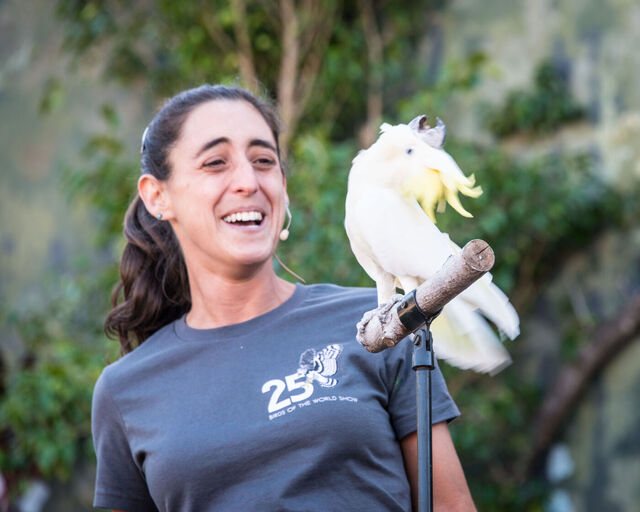
African Grey parrots are incredibly intelligent and sensitive, requiring a force-free approach to training that respects their unique needs and natural behaviors.
African Grey parrots are renowned for their incredible intelligence and uncanny ability to mimic human speech. But beyond their vocal prowess, these magnificent birds possess a complex inner world that demands a thoughtful, science-based approach to training. At Beak School, we believe in understanding what makes each species unique, and for Greys, that means recognizing their deep emotional sensitivity and cognitive capabilities. Training an African Grey isn't just about teaching tricks; it's about building a trusting relationship and enriching their lives, all through the gentle power of positive reinforcement.
The Grey Difference: Intelligence, Sensitivity, and Social Structure
Most parrot owners quickly realize that African Greys aren't just "smart" – they're on another level. But what does that mean for training?
Exceptional Cognitive Abilities
- Language Comprehension: Greys don't just mimic; many show genuine understanding of words and concepts. Research with individuals like Alex the Grey demonstrated their ability to categorize, count, and even form novel sentences. This means they're paying close attention to your communication, not just your sounds.
- Problem-Solving: They are natural strategists. Give them a puzzle, and they'll often figure it out. This translates into training as they learn to connect behaviors with consequences very quickly.
- Observational Learning: Greys are keen observers. They'll watch you and other birds (or even pets) and learn from their interactions. This can be a boon for training, but also means they're picking up on everything you do.
Deep Emotional Sensitivity
- Prone to Stress: Unlike some more boisterous parrot species, Greys can be particularly sensitive to sudden changes, loud noises, or perceived threats. A harsh tone, a sudden movement, or even an inconsistent routine can cause anxiety.
- Strong Bonds: They form deep attachments with their chosen human companions. This bond is a powerful tool for positive reinforcement training, as they are often eager to please and engage with their trusted person. However, this also means they can experience separation anxiety or emotional distress if their bond is disrupted.
- Learned Helplessness: Because of their sensitivity and intelligence, Greys are highly susceptible to learned helplessness if training is inconsistent, confusing, or aversive. They can shut down and become withdrawn if they feel they have no control over their environment or outcomes.
Social Complexity
- Flock Mentality: In the wild, Greys live in highly social flocks. This translates to their need for interaction and a sense of belonging in your home. Training should be seen as part of this social interaction, not a separate, formal event.
- Communication is Key: In their natural habitat, Greys communicate extensively. Your training methods should honor this need for clear, consistent, and positive communication from you.
Force-Free Training Principles for African Greys
Given their unique characteristics, a force-free, positive reinforcement approach is not just a preference for African Greys; it's a necessity for their well-being and successful training.
Building Trust is Paramount
- Consistency: Greys thrive on routine and predictability. Consistent training sessions, consistent cues, and consistent rewards build trust and reduce anxiety.
- Patience: Never rush a Grey. Allow them to process information at their own pace. If they seem hesitant, back up, simplify, and reinforce approximation.
- Respecting Boundaries: Learn to read your Grey's body language. If they're uncomfortable, stop. Pushing them past their comfort zone erodes trust and can lead to fear or aggression.
Positive Reinforcement is the ONLY Way
- Identify High-Value Rewards: Greys have strong preferences. Discover what truly motivates your bird – special nuts, pieces of fruit, specific toys, head scratches, or even a particular phrase of praise. Rotating rewards can keep them engaged.
- Clicker Training: The clicker is incredibly effective for Greys because it provides precise and immediate feedback. Their intelligence allows them to quickly connect the click with the desired behavior and the subsequent reward.
- Shaping Behavior: Break down complex behaviors into tiny, achievable steps. Reward each successful approximation towards the goal behavior. For example, when teaching "step up," you might first reward simply looking at your hand, then touching it, then placing one foot, and so on.
- Avoid Punishment Entirely: Punishment—whether it's a squirt bottle, yelling, or ignoring—will severely damage your bond with an African Grey. It teaches them to fear you, not to understand what you want. It can lead to plucking, aggression, and other behavioral issues. They are too sensitive and intelligent to respond well to it.
Enrichment and Environment as Training Tools
- Mental Stimulation: Provide plenty of puzzle toys, foraging opportunities, and opportunities for interaction. A bored Grey is an unhappy Grey, and an unhappy Grey is unlikely to be a willing participant in training.
- Safe and Secure Space: Ensure their cage is a secure and enriching environment, not just a place to sleep. Training should ideally happen in neutral, comfortable spaces where your bird feels safe.
- Social Interaction: Regular positive interaction with you is a form of reinforcement in itself. Talk to your grey, involve them in daily activities, and make them feel like a valued family member.
Common Training Challenges with Greys (and Solutions!)
Even with the best intentions, you might encounter specific challenges:
- "Learned Vocalizations": Greys are so good at mimicking that they can pick up unwanted phrases or sounds. The solution is simple: avoid reacting to these. Do not reward them with attention, positive or negative. Instead, reinforce desired vocalizations or silence.
- "One-Person Bird": Greys can bond very intensely with one person. To encourage interaction with others, have that "other" person be the one to offer high-value treats or engage in short, positive training sessions. The primary caregiver might step back during these interactions initially.
- "Reluctance to Train": If your Grey seems uninterested, it could be a sign of stress, boredom, or that the "reward" isn't motivating enough. Re-evaluate their environment, try different treats, or simplify the tasks. Maybe they just need a break.
- "Biting": Biting in Greys is almost always fear-based, attention-seeking, or a territorial display. Never punish it. Instead, manage the environment to prevent biting opportunities, understand the triggers, and train alternative, incompatible behaviors (like "touch target" instead of biting).
Final Thoughts
Training an African Grey is a journey, not a destination. It requires deep understanding, unwavering patience, and a commitment to force-free methods. When you approach training with respect for their incredible minds and sensitive spirits, you're not just teaching behaviors, you're building a relationship filled with trust, joy, and mutual understanding. And that, truly, is the greatest reward for both you and your magnificent feathered companion.