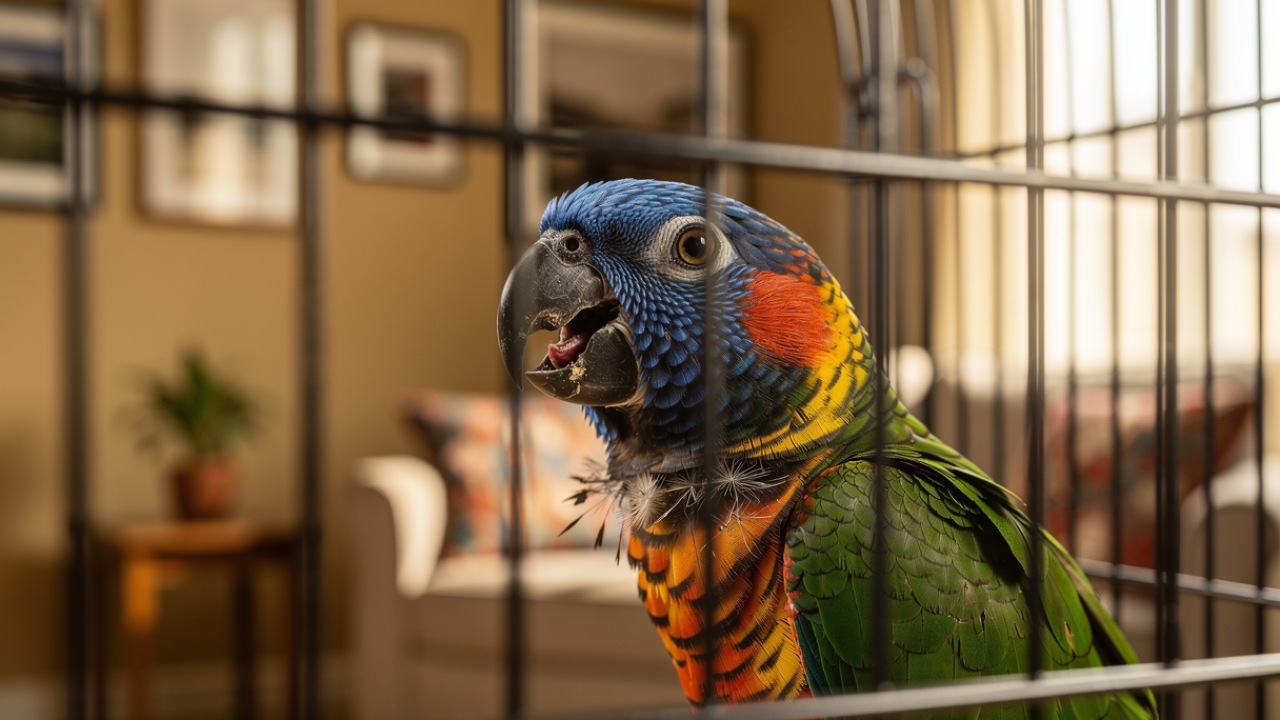
Uncover the truth about parrot noise levels with this honest breakdown by species and expert, force-free tips for a harmonious home.
The Real Scoop on Parrot Vocals
One of the most common questions I get asked, and rightly so, is about noise. "Just how loud *are* parrots?" It's a completely valid concern, whether you live in an apartment, have close neighbors, or simply value a quieter home environment. The truth is, parrots are vocal creatures – it’s a natural and essential part of their biology and how they interact with their world. But "vocal" doesn't always mean "deafening," and the level and type of noise can vary dramatically from species to species. Let's dive into an honest, no-fluff look at what to expect and how to foster a peaceful co-existence with your feathered family member.
Understanding Parrot Noise: Why They Do It
Before we break down species, it’s important to understand *why* parrots make noise. It’s not usually to annoy you (though it can feel that way at 6 AM!).
- Communication: In the wild, flock calls are essential for locating each other, warning of predators, and maintaining social bonds. Your parrot sees you as part of their flock and will call to you.
- Expression: Parrots use sounds to express joy, fear, excitement, boredom, or even pain. A happy parrot might whistle a tune, while a frustrated one might shriek.
- Territoriality: Some parrots can become loud when defending their perceived territory, especially around their cage or favorite perch.
- Seeking Attention: If a parrot learns that a loud call gets your immediate response (even a negative one), they’ll repeat it. This is where force-free training comes in!
- Mimicry: Many parrots are masterful mimics, and this includes mimicking sounds they hear regularly, like phones, doorbells, or even your own voice.
- Natural Wake-Up/Wind-Down Calls: Many species have distinct vocalizations at dawn and dusk. This is completely natural and often unavoidable.
Species by Species: An Honest Assessment of Noise Levels
Please remember, these are generalizations. Individual personalities and environments play a huge role. A well-socialized, enriched parrot of a "loud" species might be quieter than a bored, neglected parrot of a "quiet" species.
The "Can Be Quite Loud" Crew
- Macaws (Scarlet, Green-Winged, Blue & Gold, etc.): Iconic for a reason! Macaws have incredibly powerful lung capacity and can produce ear-splitting, piercing screeches. Their calls travel long distances in the wild. While they have quiet moments, their flock calls are not for the faint of heart.
- Cockatoos (Umbrella, Moluccan, Goffin's, etc.): Oh, the cockatoos! While Goffin's might be slightly less intense than an Umbrella, all cockatoos are known for loud, sustained squawks and shrieks, particularly when seeking attention or expressing strong emotions. Their "contact calls" can be incredibly demanding.
- Amazons (Double Yellow-Headed, Yellow-Naped, Blue-Fronted, etc.): Amazons are boisterous and expressive. Their calls are often described as squawks, shrieks, and loud chattering. They love to "sing" and can be very loud, especially around dawn and dusk, or when excited.
- Conures (Sun, Jenday, Green-Cheeked, Nanday, etc.): Species like Sun and Jenday Conures are notorious for their high-pitched, piercing screams that can cut through walls. Green-Cheeks are generally much quieter by comparison, but still have strong voices.
- African Greys: While often praised for their talking ability, African Greys can also be very loud. Their squawks and alarm calls are harsh and powerful, even if not as consistently ear-splitting as a Macaw or Cockatoo.
The "Moderate to Manageable" Speakers
- Eclectus Parrots: Eclectus tend to have a more conversational tone, but their alarm calls can be quite loud and piercing. They often make more cooing and chattering sounds, but don't underestimate their ability to project.
- Caiques (Black-Headed, White-Bellied): Caiques are busy, playful birds. Their vocalizations are often described as chirps, whistles, and squawks, and while they can be persistent, they generally don't reach the same decibel levels as the "loud" crew.
- Quakers/Monk Parakeets: Quakers are known for their chattering, squawking, and ability to mimic. Their calls can be loud and repetitive, but typically less piercing than a Sun Conure, for example.
- Pionus Parrots: Pionus are generally on the quieter side for parrots, but they still have their moments. Their calls are often described as breathy or whistling, though they can make alarm squawks.
The "Generally Quieter" Crowd
- Cockatiels: Cockatiels are known for their pleasant chirps, whistles, and melodious songs (especially males). While they can produce alarm calls, their overall noise level is significantly lower than larger parrots. They are a popular choice for apartment dwellers.
- Parrotlets (Pacific, Green-Rumped, etc.): These tiny powerhouses have surprising voices for their size, but because they are so small, their calls generally don't carry or penetrate walls as much as larger parrots. They have chirps, squawks, and chatter.
- Budgies (Parakeets): Budgies are almost constantly chattering, chirping, and whistling. While they are very vocal, their small size means their sounds are rarely considered disruptive, making them excellent choices for quiet homes.
- Lovebirds: Similar to budgies, lovebirds are active chatterers and chirpers. Their sounds are higher pitched and can be frequent, but generally not overwhelmingly loud.
Managing Noise Naturally: Beak School's Force-Free Tips
Instead of trying to "stop" your parrot from being natural, we aim to manage and redirect. Punishment, spraying with water, or yelling only teach your parrot to fear you or to scream more effectively for attention.
- Enrichment, Enrichment, Enrichment! A bored parrot is a loud parrot. Provide plenty of appropriate toys for chewing, foraging, and mental stimulation. Regular out-of-cage time and interaction are crucial.
- Teach an "Emergency Quiet" Cue: During a calm moment, teach your parrot a specific cue (like "Quiet please" or a gentle whistle) that means "take a soft breath." Pair it with immediate calm praise and a tiny, high-value treat. Practice when they are already quiet. This isn't for stopping screaming, but for general calm.
- Reward Quiet Moments: Actively watch for times your parrot is being quiet or making desired sounds (like talking or soft chattering). Immediately and calmly go over and offer praise and a treat. This reinforces that calm vocalizations or silence earn your attention.
- Ignore Undesired Screaming: This is the hardest part! If your parrot is screaming for attention, you *must* ignore it. Walk out of the room, turn your back, don't make eye contact. The moment they are quiet for even a second, immediately return and reward. This teaches them that screaming means you disappear, while quiet means you return.
- Address Environmental Triggers: Is the TV too loud? Is the outside traffic bothering them? Observe when the screaming occurs and see if you can modify the environment.
- Provide a "Quiet Place": Ensure their cage is covered at night and that they get adequate sleep (10-12 hours in complete darkness). A quiet, comfortable space can help.
- Train a "Target" or "Step Up" Cue: Sometimes a loud parrot just wants to interact. Teaching them to target or step up reliably allows you to redirect their energy into a positive interaction.
- Soundproofing (Where Possible): For truly loud species, consider heavy curtains, rugs, or even specialized acoustic panels in their room to help absorb sound.
- Routine: Parrots thrive on routine. Predictable feeding times, playtime, and sleep can reduce anxiety which sometimes contributes to excessive noise.
Final Thoughts
Bringing a parrot into your home means embracing their natural vocalizations. While some species are undeniably louder than others, understanding their communication, providing ample enrichment, and using consistent, force-free training methods can make a huge difference in fostering a harmonious environment for everyone. Choose wisely, understand what you’re signing up for, and be prepared to work with your parrot, not against them, to achieve peace (and maybe a little quiet) in your home.