Confused about how loud your parrot will be? Get an honest breakdown of noise levels by species to set realistic expectations and ensure a harmonious home with your feathered friend.
Understanding Parrot "Loudness"
One of the first questions many prospective parrot owners ask, besides "How long do they live?" is often, "How loud are they, really?" It's a fantastic question, and one that deserves a nuanced, honest answer. Nobody wants a surprise when it comes to the decibel levels in their home! But "loud" is a subjective term, and what sounds ear-splitting to one person might be just a happy chirrup to another. When we talk about parrot loudness at Beak School, we're not just considering volume, though that's a key part. We're also thinking about frequency of vocalizations, type of vocalizations, and how their natural behaviors translate into sounds in a home environment. Understanding these aspects by species can help you make an informed decision and prepare for life with your new feathered family member.
The Spectrum of Sound: From Quiet Chirps to Mighty Screams
Let's dive into some common parrot species and discuss their typical noise profiles. Remember, these are generalizations. Every parrot is an individual, and their environment, training, and overall well-being will significantly impact their vocalizations. A happy, well-socialized parrot with appropriate enrichment is often less prone to excessive, attention-seeking screaming than a bored or stressed one.
Budgerigars (Parakeets) & Cockatiels
- Volume: Generally low to moderate.
- Frequency: Can be quite vocal throughout the day.
- Type of Sounds: Budgies are known for their constant, chattering chirps and warbles. Cockatiels have a wider range, including chirps, whistles, and the famous male cockatiel "serenade." Their alarm call can be loud and distinct, but not usually damaging to hearing.
- What to Expect: These species offer a consistent background hum of contented bird sounds. They're rarely
what most people would consider "loud" in an irritating way, making them excellent choices for apartments or those sensitive to high decibels.
Lovebirds & Parrotlets
- Volume: Moderate to surprisingly loud for their size.
- Frequency: Can be quite vocal, especially in pairs or small flocks.
- Type of Sounds: Lovebirds have high-pitched chirps and squawks that, while not incredibly deep in volume, can be piercing due to their frequency. Parrotlets, despite their tiny size, can produce surprisingly insistent, buzzy chirps.
- What to Expect: Don't let their small stature fool you. These little birds pack a vocal punch. Their persistent, high-frequency calls can be noticeable and may bother those sensitive to high-pitched sounds.
Conures (Green-Cheeked, Sun, Jenday, Nanday)
- Volume: Highly variable by species, from moderate to very loud.
- Frequency: Can be very vocal, especially during dawn and dusk.
- Type of Sounds: Green-cheeked conures are usually on the quieter side for conures, with chattering and soft squawks. Sun, Jenday, and Nanday conures, however, are renowned for their incredibly loud, piercing, insistent squawks. These are true flock calls designed to carry over long distances.
- What to Expect: If you're considering a Sun or Jenday conure, be prepared for some serious noise. Their calls are genuinely loud and can be heard throughout a house and often beyond. This isn't a bird for quiet apartments or sensitive neighbors.
African Grey Parrots
- Volume: Moderate to loud.
- Frequency: Less prone to constant screaming than some species, but can be vocal.
- Type of Sounds: Greys are masters of mimicry. Their calls can range from soft grunts and whistles to incredibly accurate imitations of household sounds (phones, doorbells, microwave beeps) and human speech. Their natural squawk is quite loud, but they often reserve it for alarms or strong emotional displays.
- What to Expect: You might not get constant screaming, but you will get a wide array of sounds, some of which can be startlingly accurate and very loud. It's fascinating, but be prepared for unexpected noises.
Amazon Parrots (Double Yellow-Headed, Yellow-Naped, Blue-Fronted)
- Volume: Loud to very loud.
- Frequency: Can be very vocal, especially during "high-energy" times like dawn and dusk, or when excited.
- Type of Sounds: Amazons have powerful, resonant voices. Their calls are often described as squawking, screeching, and mimicking, often at high volume. They also have an impressive ability to mimic human speech clearly and can be quite the singers!
- What to Expect: Expect regular, robust vocalizations. Amazons are known for their boisterous personalities and their voices reflect that. Their "happy screams" can be quite an experience.
Cockatoos (Moluccan, Umbrella, Goffin's, Major Mitchell's)
- Volume: Very loud to deafening.
- Frequency: Can be highly vocal, especially if attention-seeking or stressed.
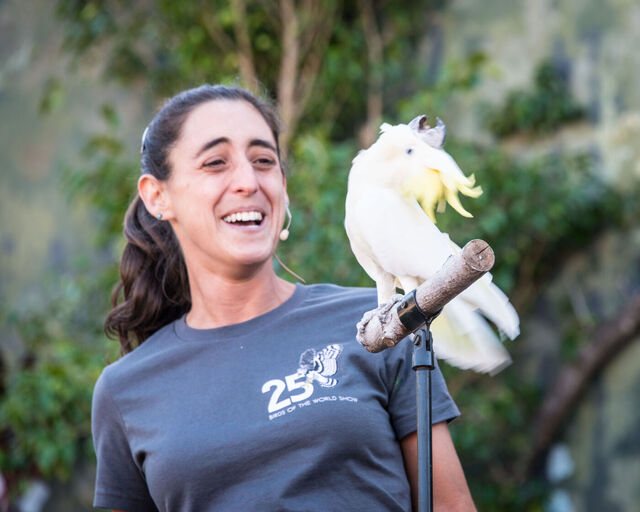
- Type of Sounds: Cockatoos are perhaps the most famous for their ear-splitting screams. Their natural flock calls are designed to travel miles through rainforests. They can also make softer coos, whistles, and some mimicry, but their default "I want something" or "I'm stressed" call is incredibly penetrating.
- What to Expect: If you value quiet, a cockatoo is probably not the bird for you. Their screams are genuinely startling and can easily be heard far outside your home. This is often a deal-breaker for apartment living or close neighbors.
Macaws (Scarlet, Blue & Gold, Greenwing, Hahn's)
- Volume: Very loud to deafening.
- Frequency: Can be very vocal, especially at "wolf-flock" times (dawn/dusk) or when communicating over distances.
- Type of Sounds: Macaws have deep, resonant, and incredibly powerful screams and squawks. They also have softer coos, growls, and some mimicry. A macaw's natural call is designed to communicate across vast jungle distances.
- What to Expect: Similar to cockatoos, macaws are not for the faint of hearing. Their calls are extremely loud and powerful, designed by nature for wide-ranging communication. A home with a macaw will be filled with big, booming vocalizations. Hahn's macaws, being mini-macaws, are a bit less intense than their larger cousins but still can be quite vocal.
Managing Normal Vocalizations with Positive Reinforcement
Regardless of species, parrots will vocalize. It's how they communicate, express joy, alarm, and boredom. Our goal at Beak School is never to silence a parrot, but to understand their communication and help them express themselves in ways that fit into a harmonious household. Here's how:
- Enrichment, Enrichment, Enrichment: A bored parrot is a noisy parrot. Provide plenty of appropriate toys, foraging opportunities, and mental stimulation to keep them engaged.
- Predictable Routine: Parrots thrive on routine. Knowing when they'll get attention, food, and playtime can reduce anxiety-induced screaming.
- Teach "Quiet" or "Low Voice": Using positive reinforcement, you can teach your parrot a "quiet" cue. When they are at a low chatter, say "Quiet!" and give a treat. Gradually, they'll associate the cue with a lower volume.
- Reinforce Desired Vocalizations: If your parrot makes pleasant chirps, whistles, or talks nicely, reinforce those behaviors with praise and treats!
- Avoid Reinforcing Undesired Screaming: This is crucial. If your parrot screams for attention and you immediately go to them, you've just taught them that screaming works. Instead, wait for a brief moment of quiet, *then* approach and reward. If the screaming is persistent, walk away and try again when it stops.
- Provide a "Calling" Partner: If you have a single bird, be prepared to be its flock. Many species have natural "contact calls" throughout the day. A quick "Hello!" or whistle from another room can satisfy this need without prolonged screaming.
- Environmental Management: Sometimes, covering a cage for a short "quiet time" or moving it away from a window where they see triggers can help.
- Health Check: A sudden increase in vocalizations can sometimes indicate pain or illness. Always consult your avian vet if you notice a significant change.
Final Thoughts
Choosing a parrot based purely on perceived loudness can be misleading if you don't consider all the factors. Every parrot will have moments of boisterous vocalization. The key is to select a species whose natural sound profile you can genuinely live with, and then commit to force-free training and a stimulating environment that encourages positive communication. Do your research, talk to owners of various species, and be honest with yourself about what you can realistically handle. A prepared owner is a happy owner, and a happy owner makes for a happy, well-adjusted parrot – no matter their natural volume!