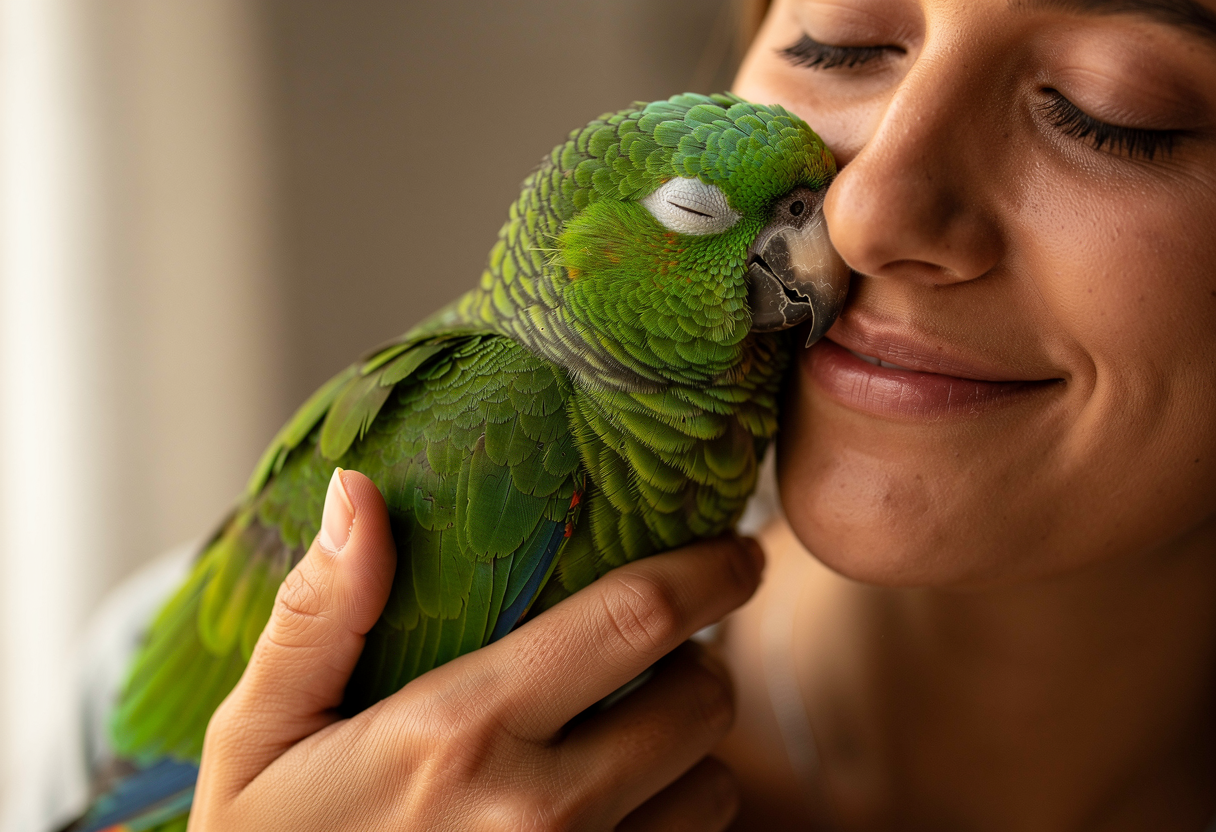
Learn how to build a strong, loving bond with your parrot through trust, positive reinforcement, and clear communication, making every interaction a positive experience for both of you.
Welcome to Beak School! Today, we're diving into a question we hear all the time: "How do I get my bird to like me?" It’s a wonderful question because it shows you’re thinking about your bird’s feelings, and that’s the first step toward a fantastic relationship. Building a bond with your parrot isn't about forcing affection; it's about earning trust, understanding their world, and making every interaction a positive one. Let's explore some common situations and how we can best respond from a force-free perspective.
Understanding Trust and Positive Reinforcement
At the heart of any successful relationship with your parrot lies trust. Our birds are prey animals by nature, and their instincts tell them to be wary. Every interaction you have with your bird is either building or eroding that trust. Our goal is always to build it up, brick by delicious, rewarding brick.
What does "force-free" mean in practice?
- No Punishment, Ever: This means no yelling, no tapping, no squirting with water, no towel grabs, and no isolating. These methods might seem to stop a behavior in the short term, but they severely damage your bird's trust in you and can lead to fear, aggression, and anxiety.
- Choice and Control: Empowering your bird to make choices is crucial. Can they choose to step up? Can they choose to eat the treat? Can they choose to engage with a toy? When birds feel they have some control over their environment, they are less stressed and more confident.
- Positive Reinforcement (R+): This is our superpower! R+ means adding something desirable to the environment immediately after a desired behavior occurs, making that behavior more likely to happen again. Think of it as saying "yes!" to your bird's good choices. This could be a favorite treat, a head scratch (if they enjoy it), praise, or a favored toy.
Common Questions & Beak School Answers
"My bird doesn't want me to touch them. How can I get them to let me pet them?"
This is a common scenario, especially with new birds or birds who haven't had much positive handling experience. The key here is patience and respect for their boundaries.
- Observe Their Body Language: Learn to recognize your bird's "no" signals. This could be leaning away, pinning their eyes, raising a foot defensively, or an open beak. Respect these signals immediately.
- Start with Proximity and Treats: Don't aim for petting right away. Instead, focus on making your presence a positive predictor of good things. Sit near their cage calmly. Offer high-value treats from your hand through the bars, or by placing them in an accessible dish when you're nearby.
- Target Training: This is an excellent way to introduce touch without pressure. Teach your bird to touch a target stick (a chopstick works well) with their beak for a treat. This builds confidence and helps them associate positive things with engaging with you. Once they're comfortable targeting, you can slowly move the target to touch their feet, then their wings, all while rewarding them for calm acceptance.
- Let Them Initiate: The best pet ever is one your bird asks for! Some birds will never enjoy head scratches, and that's okay. Focus on other ways to bond. If they do enjoy it, they might lean into your finger, fluff their head feathers, or even preen you.
"My bird bites me! How do I get them to stop?"
Biting is communication. Your bird isn't "mean"; they're telling you something important. It's crucial to figure out why they are biting.
- Identify the Triggers: When does the biting happen? Is it when you try to pick them up, reach into the cage, when they're on your shoulder, or when you approach certain toys? Understanding the context is vital.
- Avoid the Bite: Once you know the triggers, prevent the bite from happening. If they bite when you try to pick them up, don't pick them up (yet!). Instead, focus on positive interactions at a distance.
- Teach an Alternative Behavior: Instead of focusing on "don't bite," teach them what to do instead. For example, if they bite when you try to step up, practice stepping up onto a stick first, rewarding them heavily for a successful step. Then, gradually introduce your hand under the stick, then slowly replace the stick.
- Reinforce Calmness: If your bird is calm in a situation where they might normally bite, reward that calmness! This reinforces the idea that being calm gets good things.
- Manage the Environment: Is there something in their environment causing frustration? An inadequate cage, lack of enrichment, or hormonal changes can all play a role.
"My bird screams all the time. How can I get them to be quieter?"
Parrots are naturally loud, and some vocalization is completely normal. However, incessant screaming often indicates an unmet need or a learned behavior.
- What is the Scream Communicating? Are they screaming for attention? For food? Because they are bored, lonely, or scared? Your job is to be like a detective and figure it out.
- Provide Enrichment: A bored bird is often a loud bird. Ensure they have plenty of safe, destructible toys, foraging opportunities, and interesting things to do throughout the day. Rotate toys regularly to keep things fresh.
- Reinforce Quiet: This is a classic positive reinforcement strategy. When your bird is quiet for even a few seconds, approach calmly and offer a treat, praise, or gentle interaction. Start with very short periods of quiet and gradually increase the duration.
- Avoid Reinforcing Loudness: If you rush over to your bird and give them attention only when they are screaming, you are inadvertently teaching them that screaming gets your attention. When they scream, you can calmly walk out of the room until they are quiet, then return and reward the silence.
- Consistency is Key: Everyone in the household needs to be on the same page with this approach for it to be effective.
Final Thoughts
Building a deep, trusting bond with your parrot is one of the most rewarding parts of sharing your life with them. It takes time, patience, and a commitment to understanding their perspective. Always remember, your bird is a unique individual with their own feelings, preferences, and communication style. Approach every interaction with kindness, respect, and a desire to make their world a little brighter, and you'll be well on your way to a truly special friendship.