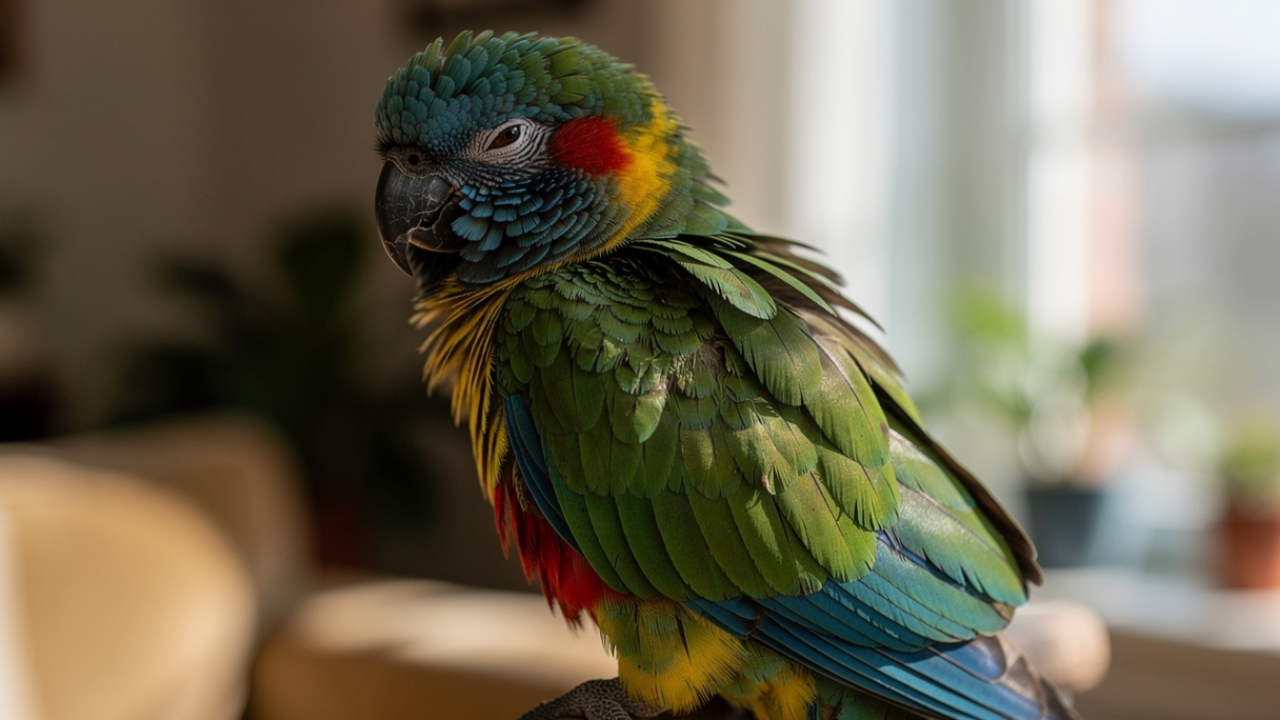
Navigate hormonal parrot behavior with force-free, science-backed strategies to reduce triggers and restore peace for you and your feathered friend.
How to Deal With a Hormonal Parrot Without Losing Your Mind
Ah, spring! The air is fresh, flowers are blooming, and your parrot… well, your parrot might be redecorating the house with their feathers, screaming like a banshee, and giving you the evil eye every time you walk past their cage. If this sounds familiar, welcome to the wonderful, wild world of hormonal parrots! Dealing with these seasonal shifts can be incredibly challenging, even for the most seasoned bird owners. But fear not, bird guardians! At Beak School, we believe in understanding our feathered friends and working *with* them, not against them. Let's dive into some force-free, science-backed ways to navigate this tricky time without losing your cool (or your hearing!).
Understanding the Hormonal Hurricane
Before we can address hormonal behaviors, it's crucial to understand why they happen. Parrots are exquisitely tuned to their environment, and subtle changes in light, temperature, and diet can signal that it's breeding season. This can manifest in a variety of ways:
- Increased aggression: Biting, lunging, guarding their cage or preferred person.
- Nest-seeking behaviors: Shredding paper, exploring dark nooks, trying to chew holes in furniture.
- Egg laying (for females): This is a serious health concern and requires immediate attention.
- Regurgitation: Often directed towards a favorite person or toy as a courtship display.
- Screaming or increased vocalizations: Communicating their readiness to breed or frustration.
- Changes in appetite or sleep patterns: They might be more restless or less interested in food.
- Cloacal rubbing: Against objects or even people, often mistaken for affection.
It’s important to remember that these behaviors are completely natural and instinctual. Your parrot isn’t trying to be “bad”; they are simply responding to powerful biological drives. Our job is to help them navigate this period as comfortably and safely as possible, minimizing the triggers that amp up their hormonal state.
Environmental Adjustments: Dimming the Lights on Hormones
Many hormonal triggers stem directly from their environment. Making a few key adjustments can significantly reduce the intensity and duration of hormonal behaviors.
- Light Cycle Management: This is arguably the most crucial step. Wild parrots experience strict light cycles. In our homes, artificial light can trick their bodies into thinking it's always breeding season.
- Provide 10-12 hours of uninterrupted darkness every night. This means truly dark – no nightlights, no TV glow, no streetlights seeping in. Consider a cage cover that blocks light effectively.
- Place their cage away from windows or artificial light sources that could extend their perceived "daylight."
- Dietary Considerations: Abundant, high-fat, or sugary foods signal a lush breeding environment.
- Temporarily reduce the amount of high-fat foods like nuts, seeds, and calorie-dense cooked items.
- Focus on a diet rich in fresh vegetables, and a high-quality, formulated pellet.
- Ensure fresh water is always available.
- Removing Nesting Opportunities: Any dark, enclosed space can become an irresistible nesting site.
- Remove happy huts, igloos, or fabric tents from the cage. These are primary culprits for stimulating nesting.
- Block access to dark corners behind furniture, under beds, or inside cabinets.
- If your parrot is fixated on a particular spot, consider permanently blocking it or making it less appealing (e.g., placing a non-chewable toy there).
- Immediately remove any shredded paper, wood, or other potential nesting materials they might collect.
- Managing Temperature and Humidity: While harder to control, overly warm and humid environments can also mimic breeding conditions. Keep your home at a comfortable, consistent temperature.
Behavioral Strategies: Redirecting and Reinforcing Calm
Once you’ve tackled the environmental triggers, the next step is to manage the behavioral manifestations with patience and positive reinforcement.
- Avoid Reinforcing Hormonal Behaviors:
- No petting below the neck: Petting your parrot anywhere other than their head and neck can be interpreted as foreplay. It’s a very common human error that can dramatically intensify hormonal issues. Stick to head scratches!
- Don't encourage regurgitation: If your parrot regurgitates on you or a toy, calmly put them down or place the toy away. Do not reward this behavior with attention or affection.
- Ignore screaming (when possible): If your parrot is screaming for attention, try to ignore it until there is a brief lull, then reward the quiet with attention or a treat. This is easier said than done, but consistency is key.
- Increase Enrichment and Foraging: A busy bird is generally a less hormonally fixated bird.
- Provide plenty of safe shreddable toys (paper, untreated wood blocks, cardboard). This satisfies their instinct to chew and destroy without leading to nesting.
- Introduce foraging toys that require them to "work" for their food. This mental stimulation keeps them engaged.
- Rotate toys regularly to keep things fresh and exciting.
- Training and Relationship Building: Hormonal periods are an excellent time to double down on positive reinforcement training.
- Teach new tricks, work on stationing (staying in a designated spot), or reinforce cooperative care behaviors. This channels their energy into constructive activities and strengthens your bond.
- Build a vocabulary around consent. Teach "step up" and "step down" to give them agency and avoid forced interactions.
- Use high-value treats to reward calm, appropriate behaviors. Catch them being good!
- Respect Boundaries: Hormonal parrots can be nippy and aggressive.
- Learn to read your parrot’s body language. Recognize warning signs like pinned pupils, puffed feathers, or leaning away.
- If your parrot is guarding their cage, don't force interaction. Step back and give them space.
- Offer choice. Instead of reaching in, offer a foot toy or a treat that encourages them to come to the cage door on their own terms.
When to Seek Professional Help
Sometimes, despite our best efforts, hormonal behaviors can become extreme or lead to health issues. Don't hesitate to reach out for additional support if:
- Egg binding: Your female parrot is straining, lethargic, or showing signs of discomfort. This is an emergency.
- Chronic egg laying: Repeated egg laying can deplete calcium and lead to serious health problems.
- Severe aggression: If behavior is unmanageable or poses a risk to you or your parrot.
- Self-mutilation or feather destruction: Hormones can be a contributing factor.
In these cases, consult with an avian veterinarian who can assess the situation, potentially recommend medication (like Lupron for females to suppress ovulation), or refer you to a certified parrot behavior consultant. A behavior consultant can provide personalized strategies tailored to your specific bird and home environment.
Final Thoughts
Dealing with a hormonal parrot requires patience, consistency, and a deep understanding of their natural instincts. By managing their environment, redirecting unwanted behaviors with positive reinforcement, and knowing when to ask for professional help, you can navigate these challenging periods without losing your mind. Remember, your parrot isn't being "naughty"; they're just being a parrot! With empathy and the right strategies, you can maintain a happy, healthy relationship with your feathered companion, even during the hormonal hurricane.