
April 11, 2026
Nesting Behavior in Pet Parrots: Causes and Management
Understanding parrot nesting behavior and its hormonal triggers is key to managing it effectively and humanely in your pet bird.
Try for $27
Beak School·The authority in force-free parrot behavior
Force free, science based training for companion parrots.
The author of this article is separate from the Beak School training courses and their instructors.
Force-free methods, always
If you are not sure which pattern your bird is stuck in, the will tell you.
Several environmental and social factors can act as "switches" for your parrot's reproductive hormones. Identifying and modifying these triggers is central to a force-free management strategy.
Environmental Triggers:
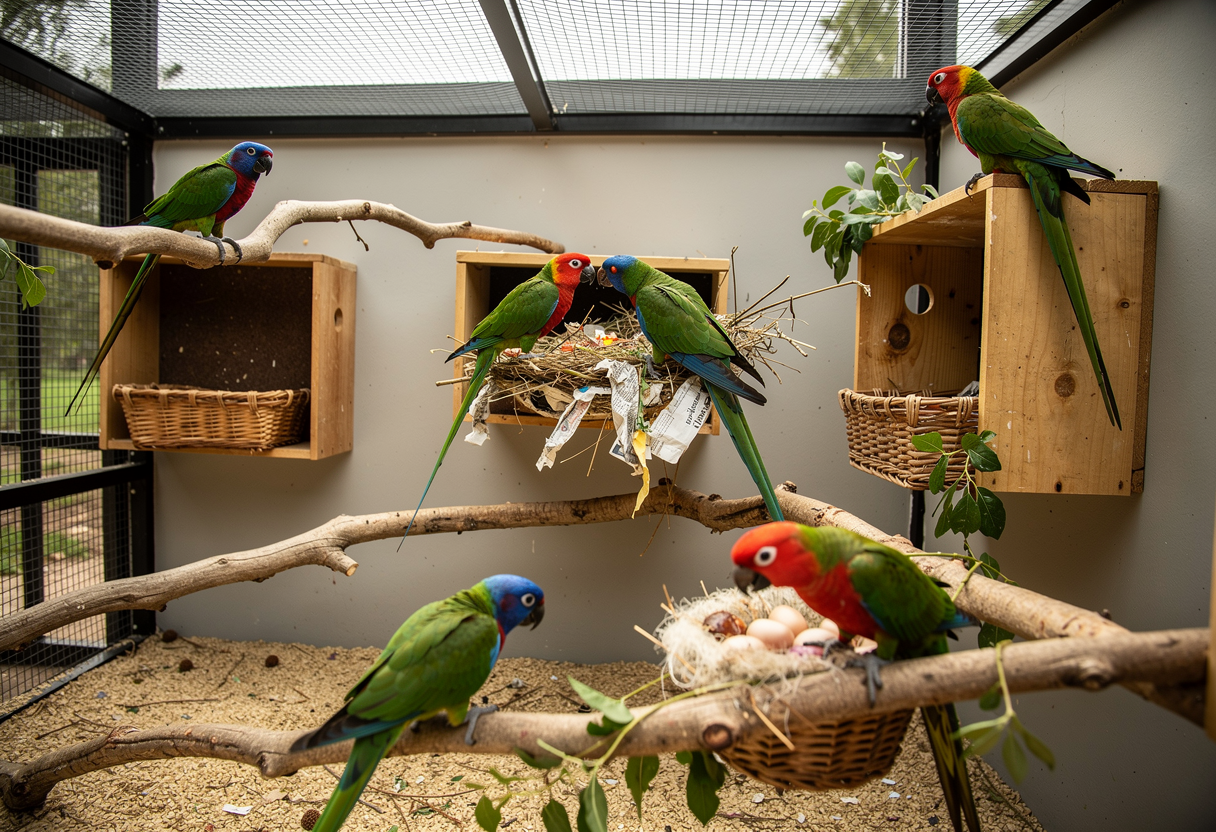
* **Perceived "Nesting Sites":** Any dark, enclosed, or cozy space can signal to your parrot that it's a good place to lay eggs. This includes open cupboards, laundry baskets, spaces behind furniture, pet carriers left open, or even your clothing. * **Diet:** A diet rich in fatty, sugary, or soft, mushy foods (like table scraps meant for humans) can signal abundance and readiness for breeding. A high-quality, balanced diet is essential for overall health and can help regulate hormonal surges. * **Daylight Hours:** Seasonal changes are often a primary trigger in the wild. If your parrot's enclosure or room receives extended periods of light, especially during winter months, their bodies might interpret this as spring – prime breeding season. * **Temperature:** Consistently warm temperatures can also contribute to a breeding season interpretation. * **Access to Shredding Materials:** While enrichment is vital, an excessive supply of easily shredded materials *can* sometimes contribute to the feeling of having abundant nesting material.Social & Behavioral Triggers:
* **Petting and Affection:** Petting your parrot anywhere other than their head and neck can inadvertently simulate courtship and mating behavior. Back-stroking, cuddling your bird against your chest, or stroking under their wings can strongly stimulate hormonal responses. * **"Mating" Objects:** Some parrots will fixate on certain toys, mirrors, or even parts of their cage, treating them as potential mates. Regurgitating to these objects is a clear sign. * **Over-Bonding:** While a strong bond is wonderful, over-bonding to a human can sometimes lead a parrot to perceive that human as their mate, leading to frustration and hormonal behavior if breeding is not possible. * **Lack of Sleep:** Insufficient sleep can sometimes throw a parrot's system out of whack, contributing to stress and hormonal imbalances.Force-Free Management Strategies
Our goal is to gently and consistently communicate to your parrot that "now is not the time for breeding" by modifying environmental and social cues. Remember, consistency is key, and it might take time for hormonal cycles to adjust.Environmental Adjustments:
* **Remove Nesting Opportunities:** * Block access to dark, enclosed spaces. Close cupboard doors, put away laundry baskets, place furniture flush against walls. * If your parrot attempts to nest in a specific spot, gently and consistently redirect them away without scolding. You might need to temporarily block access to that spot. * Avoid providing "nest boxes" or anything that resembles one, unless specifically advised by your avian vet for a particular health reason (e.g., egg-laying issues requiring a safe space). * **Optimize Diet:** * Ensure a high-quality, balanced diet primarily consisting of pellets, fresh vegetables, and a small amount of fruit. * Limit fatty, sugary, and soft, mushy foods. These can be perceived as an abundance of food resources signaling reproductive readiness. * **Regulate Light Cycles:** * Provide 10-12 hours of uninterrupted, dark sleep every night. Use a dark cover over the cage or move the cage to a dark room if necessary. This mimics the shorter days of the non-breeding season. * Limit exposure to bright artificial light sources late into the evening. * **Maintain Stable Temperature:** Keep your home at a comfortable, consistent temperature that isn't excessively warm, especially during times you're trying to reduce hormonal activity.Behavioral & Interaction Adjustments:
* **Mindful Petting:** Limit petting to the head and neck area only. Avoid stroking your parrot's back, under their wings, or against their body. * **Discourage Regurgitation:** If your parrot regurgitates to you or a toy, gently (without anger) put them back on their perch or remove the toy for a short period. Do not reward this behavior with attention or affectionate words. * **Manage "Mating" Objects:** If your parrot fixates on a specific toy or mirror, remove it for a period. Introduce new, stimulating toys to redirect their attention. * **Promote Independence and Enrichment:** Encourage independent play and foraging. Provide a variety of puzzle toys, shreddable toys, and opportunities for physical and mental stimulation that don't involve mating-like interactions. * **Teach "Step Up" and "Step Down":** Having reliable husbandry behaviors allows you to calmly redirect your bird away from perceived nesting spots without force. * **Increase Exercise:** More flying and physical activity can help burn off excess energy and provide healthy outlets.When to Seek Professional Help
While managing nesting behavior with these strategies is often effective, there are times when professional guidance is necessary. * **Chronic Egg Laying:** If your parrot is laying eggs frequently (more than 1-2 clutches per year, or a very large clutch), this can put a significant strain on their health. This requires immediate veterinary intervention. * **Aggression or Biting:** If nesting behavior escalates to severe aggression, biting that breaks skin, or poses a safety risk, consult with a certified parrot behavior consultant *and* your avian vet. * **Loss of Appetite or Lethargy:** Any sudden change in appetite, energy levels, or droppings warrants an immediate visit to an avian veterinarian. * **Prolonged Behavior:** If you've consistently applied the above strategies for several weeks/months and see no improvement, or the behavior seems to worsen, it's time to seek expert advice. Your avian vet can assess your parrot's overall health and discuss medical interventions if necessary (such as hormone implants for chronic egg-layers). A certified parrot behavior consultant can help you tailor a specific management plan and address underlying behavioral concerns.Final Thoughts
Nesting behavior is a natural, albeit sometimes challenging, part of parrot ownership. By understanding the hormonal drivers and applying consistent, force-free management strategies, you can help your parrot navigate these biological urges in a way that promotes their well-being, health, and a harmonious relationship with you. Patience, observation, and a willingness to adapt your approach are your best tools.Keep learning
How Longer Days in Spring Trigger Hormonal Behavior in Parrots
Discover how longer spring days ignite hormonal behaviors in parrots and learn humane, science-backed strategies for managing these seasonal shifts safely and effectively.
How to Deal With a Hormonal Parrot Without Losing Your Mind
Navigate hormonal parrot behavior with force-free, science-backed strategies to reduce triggers and restore peace for you and your feathered friend.
African Grey Parrot Training: What Makes Them Different
African Grey parrots possess a unique intelligence and sensitivity that demands a tailored, force-free approach to training and building an unbreakable bond.