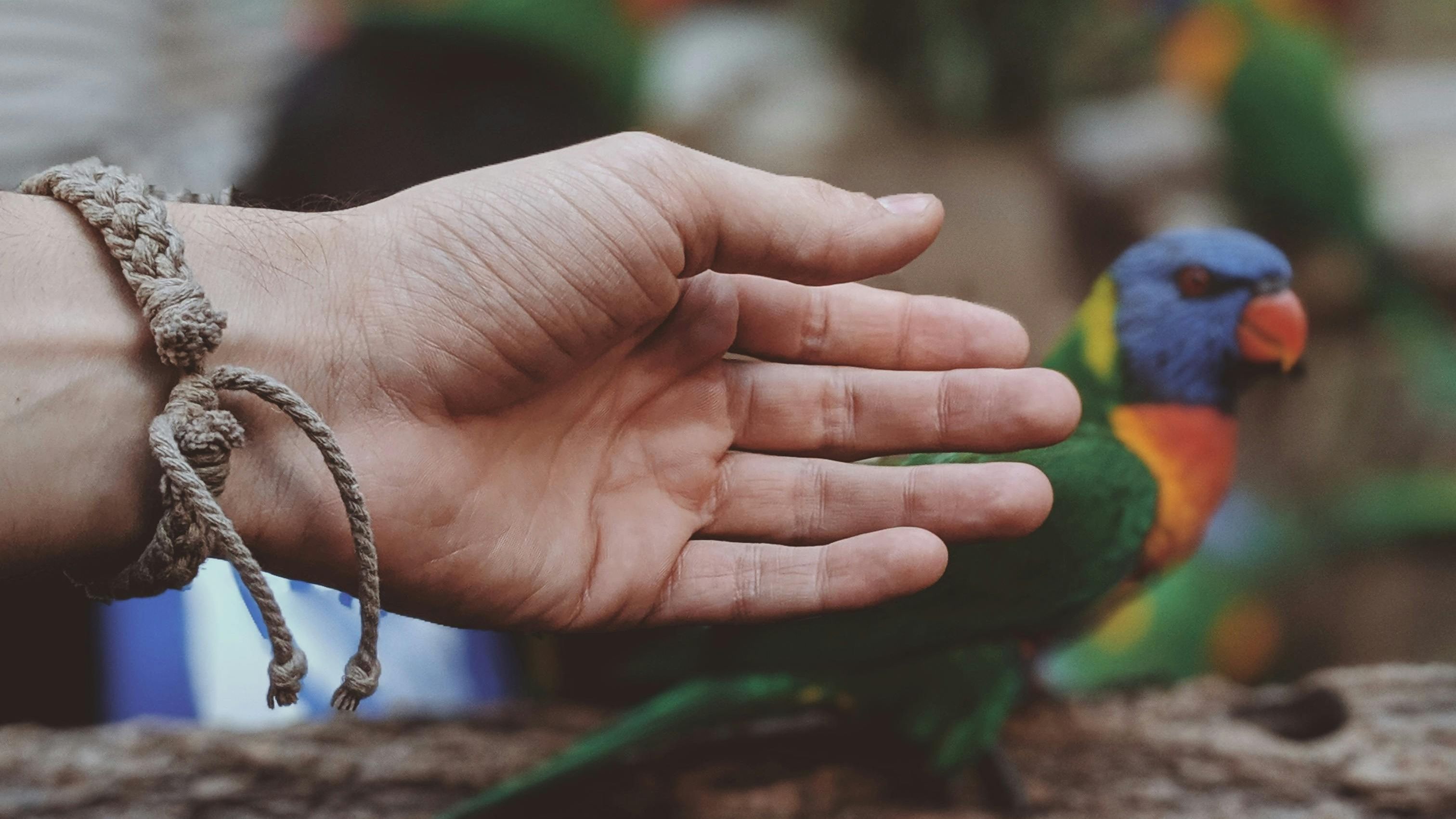
Learn to understand why your parrot bites and how to use positive reinforcement to build trust and stop unwanted biting behaviors.
Biting can be one of the most frustrating and sometimes even frightening behaviors our beloved parrots exhibit. It can undermine the bond we share and make interaction challenging. But here at Beak School, we believe that understanding is the first step towards a solution. Your bird isn't biting to be "mean" or "dominant." More often than not, biting is a form of communication, a last resort when other signals have been ignored.
Understanding Why Your Bird Bites
Before we can address biting, we need to put on our detective hats and figure out *why* your bird is resorting to this behavior. Think of biting as your bird's way of saying something important. What could it be trying to tell you?
Fear and Defense
- Threat Perception: A sudden movement, a new person, an unfamiliar object, or even a particular clothing item can be perceived as a threat by your bird. Their natural instinct is to defend themselves.
- Past Negative Experiences: If your bird has experienced forceful handling, scolding, or other aversive interactions, they may bite out of fear of a repeat experience.
- Surprise: Reaching into the cage without warning or startling your bird while they are sleeping can trigger a defensive bite.
Overstimulation or Sensory Overload
- Too Much Petting: While some birds enjoy head scratches, petting them on their back or wings (especially if they are hormonal) can be sexually stimulating and uncomfortable, leading to a bite when they want it to stop.
- Loud Noises/Busy Environment: A chaotic environment with constant loud noises, flashing lights, or a lot of activity can overwhelm a sensitive bird, leading to irritability and reactive biting.
Hormonal & Seasonal Changes
- Breeding Season Aggression: Many birds become more territorial, protective of their cage, and prone to biting during breeding season. They might also direct hormonal frustrations at you.
- Nest Protection: If your bird perceives its cage, a toy, or even a specific corner of a room as a "nesting site," they might defend it fiercely.
Lack of Training or Clear Communication
- Unwanted Attention Seeking: If biting has previously resulted in you putting the bird down or retreating, they may learn that biting gets them what they want – to be left alone.
- "Step Up" Refusal: If your bird doesn't want to step up and you insist, they may use a bite to communicate their refusal.
- Resource Guarding: Your bird might bite to protect a favorite toy, food item, or even a person they perceive as "theirs."
Health Issues & Discomfort
- Pain or Illness: A bird that is not feeling well, is in pain, or is experiencing a new health issue might bite when handled because they associate handling with discomfort. Any sudden change in behavior, including biting, warrants a vet check-up.
- Feather Pinning: During molting, new feather shafts (pins) can be very sensitive. If you accidentally touch a sensitive pin feather, your bird might react with a bite.
Effective & Ethical Strategies to Prevent Biting
Now that we understand the "why," let's dive into practical, force-free strategies. The goal is to teach your bird alternative, desirable behaviors through positive reinforcement, while building a stronger foundation of trust.
1. Observation & Prevention: Be a Bird Behavior Detective
- Learn Body Language: This is paramount! Understand your bird's "tells" – pinned eyes, ruffled neck feathers, stiff posture, tail fanning, fluffed feathers, a low growl, or a quick head dart. These are all warnings that a bite might be coming. Acknowledge these warnings as communication, not defiance.
- Identify Triggers: Keep a journal. When does your bird bite? What precedes it? Is it a specific person, time of day, toy, or situation? Once you identify triggers, you can work to avoid or desensitize them.
- Proactive Management: If you know your bird gets bitey when overly tired, put them away for a nap. If they get hormonal around a specific toy, temporarily remove it. Prevent the bite from happening in the first place.
- Give Your Bird Choices: Set up perches so your bird can move away from perceived threats. Don't force interaction if they're showing signs of wanting space.
2. Behavior Modification Through Positive Reinforcement
- Reinforce Desired Behaviors: Instead of focusing on the biting, focus on what you *do* want your bird to do. Reward calm, gentle interactions. If your bird offers a soft beak tap instead of a hard bite, reward that immediately with praise or a tiny treat.
- Target Training: Teach your bird to touch a target stick with their beak. This is an excellent way to guide them without using your hands, giving them a constructive outlet for their beak, and building confidence. Reward heavily when they successfully target.
- "Beak to Yourself" Training: When your bird is calm and on your hand or arm, offer a small, favorite treat with your other hand. If they take it gently, praise them. If they try to mouth or bite your fingers, gently withdraw the treat without a reaction and try again when they are calm. The goal is to teach them that gentle interaction gets them the treat, while biting makes the treat disappear.
- Offer Alternatives: Provide plenty of appropriate chewing opportunities (safe toys, shreddables). If your bird is inclined to chew, redirect that energy to a toy rather than your fingers.
3. Build Trust & Respect
- Never Force Interaction: If your bird doesn't want to step up, don't chase them or force them. This only reinforces fear and erodes trust. Use target training to encourage them onto your hand.
- Gentle Handling: Always approach your bird slowly and predictably. Talk to them in a calm, soothing voice.
- Respect Their Space: Know when to back off. If your bird is telling you "no" with their body language, listen to them. This empowers your bird and strengthens your bond.
- Short, Positive Interactions: Keep training sessions short and always end on a positive note, even if it's just for a simple target touch or a gentle treat take.
- Consistency is Key: Everyone in the household should use the same positive, force-free methods. Inconsistent training confuses your bird.
4. Environmental Enrichment & Basic Needs
- Adequate Sleep: Ensure your bird gets 10-12 hours of uninterrupted sleep in a quiet, dark environment. A sleep-deprived bird is a grumpy bird.
- Proper Diet: A healthy diet is crucial for overall well-being and can impact behavior. Consult your avian vet about the best diet for your specific species.
- Mental Stimulation: Boredom can lead to destructive behaviors, including biting. Provide a variety of foraging toys, shreddable toys, and opportunities for safe independent play. Rotate toys regularly to keep things interesting.
- A Safe & Secure Environment: Ensure their cage is a safe haven, not a place they feel trapped or threatened.
What NOT to Do (Aversive Methods)
It's crucial to reiterate that force-free means no punishment ever. These methods might seem to stop the behavior in the moment but they damage trust, increase fear, and often lead to escalated, more aggressive biting in the long run. Avoid:
- Yelling or scolding.
- Hitting or flicking their beak.
- Spraying with water.
- Dropping them or shaking your hand.
- "Beaking" back at them.
Final Thoughts
Stopping biting is a journey of understanding, patience, and consistent positive reinforcement. It’s about learning your bird’s unique language and teaching them a new, more effective way to communicate their needs. By investing in trust-building and positive training, you're not just stopping an unwanted behavior; you're deepening the incredible bond you share with your feathered companion. Celebrate every small success, and remember that your bird wants to communicate with you – sometimes they just need a little help finding the right words (or behaviors!).