
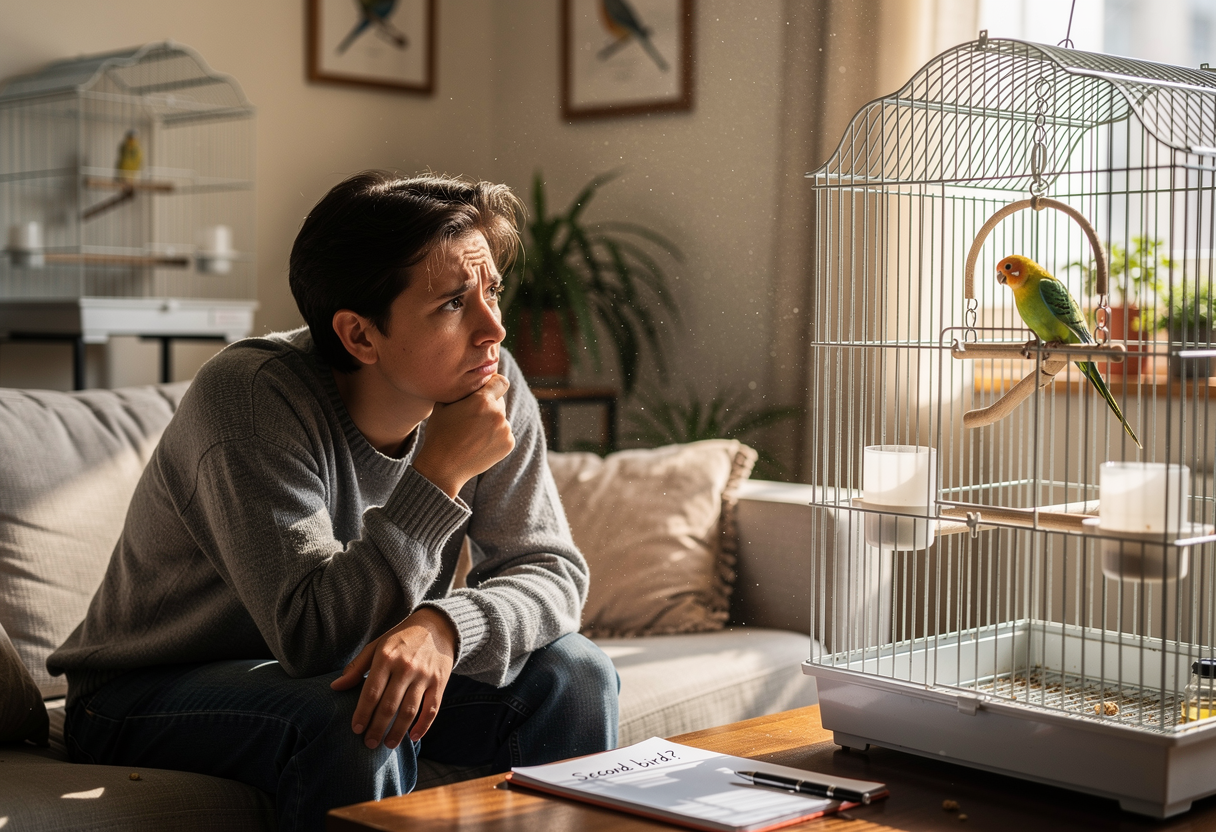
The thought of adding another feathered friend to your flock can be exciting! You envision two birds happily playing, preening each other, and filling your home with double the joy. But before you dive into the wonderful world of multi-bird guardianship, let's pause and consider some common reasons why owners contemplate a second bird, and whether those reasons truly align with your goals and your current bird's well-being.
Why Are You Considering a Second Bird?
Often, the desire for another bird stems from good intentions, but sometimes it's a quick fix for a deeper issue. Let's explore some common motivations:
- "My bird is lonely." This is perhaps the most frequent reason. You worry your bird is bored or lacks companionship when you're not around.
- "My bird is biting/screaming/plucking." You might hope a second bird will distract your current bird from these challenging behaviors.
- "I want them to breed." While a natural instinct, breeding parrots is a complex endeavor with significant responsibilities beyond simply housing two birds together.
- "I just love birds!" This is a perfectly valid and heartwarming reason, but it's important to approach it with careful planning.
- "I want a bird to bond with my current bird, so it will leave me alone!" This is a common misconception, and almost always leads to disappointment.
Each of these motivations deserves a closer look, as the solution might not always be another bird.
Addressing Common Motivations with Force-Free Solutions
"My Bird is Lonely" / "I Want Them to Bond with My Current Bird"
This is a common concern for single bird owners, especially if they work long hours. While parrots are social, their primary bond is often with their human flock. Bringing in another bird doesn't guarantee instant friendship. In fact, it can lead to:
- Competition for your attention: Birds may become jealous or aggressive over your affection.
- Bullying or aggression: Not all birds get along. Introducing a new bird can lead to stress, fights, and even injury.
- Neglect of the existing bond: If your goal is for your birds to bond and ignore you, you might find yourself inadvertently creating a situation where both birds become less receptive to human interaction.
Force-Free Solutions for "Loneliness":
- Increase Quality Interaction: Even 15-30 minutes of focused, positive interaction daily can make a huge difference. Think training sessions, shared meals, or simply hanging out in the same room.
- Environmental Enrichment: Provide a variety of safe, engaging toys that can be rotated frequently. Think foraging toys, shreddable toys, and puzzle toys to keep their minds active.
- Avian-Appropriate Entertainment: Play bird-friendly music, nature sounds, or even specific bird videos (with caution and supervision) when you're away.
- Training for Independence: Teach your bird to entertain themselves with toys and foraging opportunities. Reinforce calm, independent play.
- Daylight Factors: Ensure your bird is getting adequate, uninterrupted sleep in a quiet, dark environment (10-12 hours). Disruptions can lead to grumpiness and behavioral issues.
- Nutrition: A healthy diet is foundational to a happy bird. Ensure your bird is receiving a high-quality pellet, fresh vegetables, fruits, and appropriate healthy treats.
Remember, your bird is bonded with you. Diluting that bond isn't always the best path to a happy bird.
"My Bird is Biting/Screaming/Plucking"
These are often symptoms of underlying issues, not a lack of a feathered companion. Introducing another bird can actually exacerbate these problems due to stress, competition, or perceived threats.
Force-Free Solutions for Behavioral Challenges:
- Consult a Certified Parrot Behavior Consultant: This is the most crucial step. A professional can help identify the root cause of the behavior and create a tailored positive reinforcement plan.
- Review Environment & Routine: Are there changes in the home that could be causing stress? Is the bird getting enough sleep? Is their cage appropriately sized and enriched?
- Positive Reinforcement Training: Teach desired behaviors using rewards. For example, reinforce quiet moments, calm interactions, or accepting affection appropriately.
- Medical Check-Up: For plucking especially, or any sudden behavioral change, a vet visit is essential to rule out underlying medical conditions.
- Enrichment & Foraging: As mentioned, a stimulated bird is often a happier bird. Many problem behaviors stem from boredom or lack of mental engagement.
Avoid the temptation to use a second bird as a "band-aid" for existing behavioral problems. It rarely works and can create two birds with issues instead of one.
"I Just Love Birds!" (Thoughtful Expansion)
If your primary motivation is simply to expand your flock because you adore parrots and have the time, resources, and space, then a second bird can bring immense joy!
Considerations for a Thoughtful Addition:
- Space: Do you have room for a separate, adequately sized cage for the new bird? Are there multiple safe play areas?
- Time: Can you dedicate individual, quality time to both birds? You'll essentially be doubling your interaction time.
- Financial Resources: Twice the food, twice the toys, twice the vet bills. This adds up quickly.
- Quarantine Protocol: Any new bird must undergo a strict quarantine period (typically 30-90 days, away from your current bird) to prevent the spread of illness. This requires a separate room and dedicated care.
- Individual Personalities: Not all birds will be best friends, or even tolerate each other. Be prepared for the possibility that your birds may coexist peacefully but not intimately, or may even need to be kept entirely separate.
- Introduction Process: If you plan for them to interact, a slow, supervised, and positive introduction process is critical. Never force interactions.
Final Thoughts
Adding a second bird is a significant decision with long-term implications for both birds and your household. While the idea of a feathered "best friend" for your current parrot is lovely, it's not a guarantee and shouldn't be the primary solution for behavioral challenges. Focus first on meeting your current bird's needs for enrichment, positive interaction, training, and veterinary care. If those are all met, and your heart still calls for another feathered companion, proceed with careful planning, a solid quarantine protocol, and realistic expectations. You and your flock will be happier for it.